

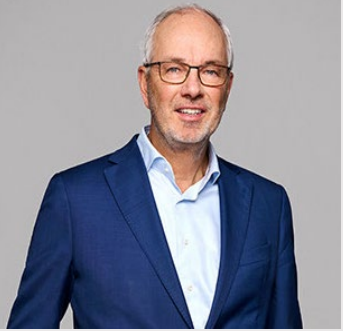
During the Boardroom Dinner on 29 September, Pieter van Oord, President & CEO of Royal Schiphol Group, will engage in a conversation with you about Schiphol’s master plan and the strategic dilemmas it entails. Central questions include: how do you maintain Schiphol as a driving force of the Dutch economy without increasing pressure on the living environment? How can an organisation operate stably in a politically volatile reality? And does low public trust in politics create opportunities for businesses?
Event for Chief Executive Officers and Board Members
5:30 PM | Program starts (including presentation, discussion, and 3-course dinner)
8:30 PM | End of formal program, opportunity for informal networking
Language: English
Head office Schiphol
CEO
Pieter van Oord is an executive with a passion for infrastructure and social connection. Since June 2024, he has served as President and CEO of Royal Schiphol Group, where he works on a future-proof airport organization with a focus on quality, reliability, and a better balance with the environment. Under his leadership, the largest investment program in the airport’s history was announced, aimed at renewal, maintenance, and sustainability. Before joining Schiphol, Van Oord led the family business Van Oord for over fifteen years. There, he gained international experience in dredging, offshore energy, and major infrastructure projects.
Schiphol Group consists of a network of airports, including Amsterdam Airport Schiphol, Rotterdam The Hague Airport, Eindhoven Airport, and Lelystad Airport.
Schiphol operates in a complex environment where economic interests, societal expectations, and politics intersect. After years of underinvestment, further development is necessary, with a fundamental shift in direction: from growth and low cost to quality and balance.
During the Boardroom Dinner on 29 September, Pieter van Oord, President & CEO of Royal Schiphol Group, will engage in a conversation with you about Schiphol’s master plan and the strategic dilemmas it entails. Central questions include: how do you maintain Schiphol as a driving force of the Dutch economy without increasing pressure on the living environment? How can an organisation operate stably in a politically volatile reality? And does low public trust in politics create opportunities for businesses?
These issues extend beyond Schiphol alone. They reflect broader societal tensions around growth, sustainability, quality of life, and national resilience. In times of uncertainty, a well-functioning airport is essential for accessibility, logistics, and security. In this context, Schiphol sees itself as a connector: a platform where government, business, and society come together to make decisions about the future. This also calls for greater mutual solidarity between companies within an ecosystem under pressure.
The core message is clear: Schiphol’s dilemmas are societal choices. They require collaboration, shared responsibility, and strategic leadership. You are warmly invited to join this urgent dialogue.
"*" indicates required fields